

Car Scratch Repairs in Luton
Finding a new scratch on your car is frustrating, particularly when you do not know how it happened or whether it can be removed. Hardings ARC repairs scratched car doors, bumpers, wings, bonnets and other painted panels for drivers throughout Luton. From light surface marks to deep scratches that have penetrated the paint, our technicians can assess the damage and explain the most suitable way to restore your vehicle.
Get A Free Quote
Car Paint Scratch Repairs in Luton
Scratches can quickly spoil the appearance of an otherwise well-maintained car. They may be caused by another vehicle, a shopping trolley, roadside vegetation, keys, walls or everyday parking incidents. Although some marks affect only the surface, deeper scratches can penetrate the coloured paint and expose the primer, plastic or metal beneath.
At Hardings ARC, every repair begins with an assessment of the scratch and surrounding bodywork. This allows our technicians to identify how deeply the paint has been damaged and whether the affected panel has also been dented, cracked or distorted.
The correct repair could involve polishing a minor surface mark, preparing and refinishing a localised area or repainting a larger part of the panel. We explain the proposed work clearly and provide a quotation before beginning the repair.

Can the Scratch Be Polished Out?
Some light scratches only affect the transparent clear coat that protects the coloured paint underneath. These marks may appear white under certain lighting or become less visible when the panel is wet. If the scratch cannot easily be felt with a fingernail, professional polishing may be sufficient to improve or remove it.
A scratch that catches your fingernail or reveals a different colour is likely to have penetrated further into the paint system. Polishing cannot replace missing paint, primer or protective coating. Deeper damage normally needs to be prepared, levelled and refinished to restore the surface properly.
The fingernail test can provide an initial indication, but it is not a complete diagnosis. The position of the mark, condition of the existing paint and material beneath it must also be considered before deciding how the scratch should be repaired.

How Do You Fix Scratched Paint on a Car?
The correct repair depends on the depth, length and location of the scratch. Our technicians begin by examining the affected panel and checking for dents, cracks, distortion or previous paintwork. Surface contamination and transferred paint are removed so that the underlying damage can be seen clearly.
If the scratch requires paintwork, the damaged area is prepared to create a smooth and stable surface. Appropriate primer, matched colour and finishing layers are applied according to the requirements of the repair. The surface is then completed to create a consistent level of colour, texture and gloss.
Modern car colours can contain metallic particles, pearlescent layers and subtle manufacturer variations. Professional colour matching helps the repaired area blend naturally with the existing bodywork instead of leaving an obvious patch of mismatched paint.
Can You Repair a Deep Scratch on My Car?
Deep scratches can often be repaired without replacing the complete panel. The damaged paint must be removed or levelled around the affected area before the surface can be rebuilt. Where bare metal has been exposed, the repair must also restore protection against moisture and corrosion.
The required repair area may be wider than the visible scratch. This allows the technician to blend the finish into the surrounding paint and avoid leaving hard edges. Long keyed scratches or marks crossing panel contours can therefore require more extensive preparation than a small isolated chip.
If the panel is also heavily dented, cracked or distorted, paintwork alone will not be sufficient. Our wider car body repairs in Luton include dent repairs, bumper work, panel restoration and component replacement where necessary.
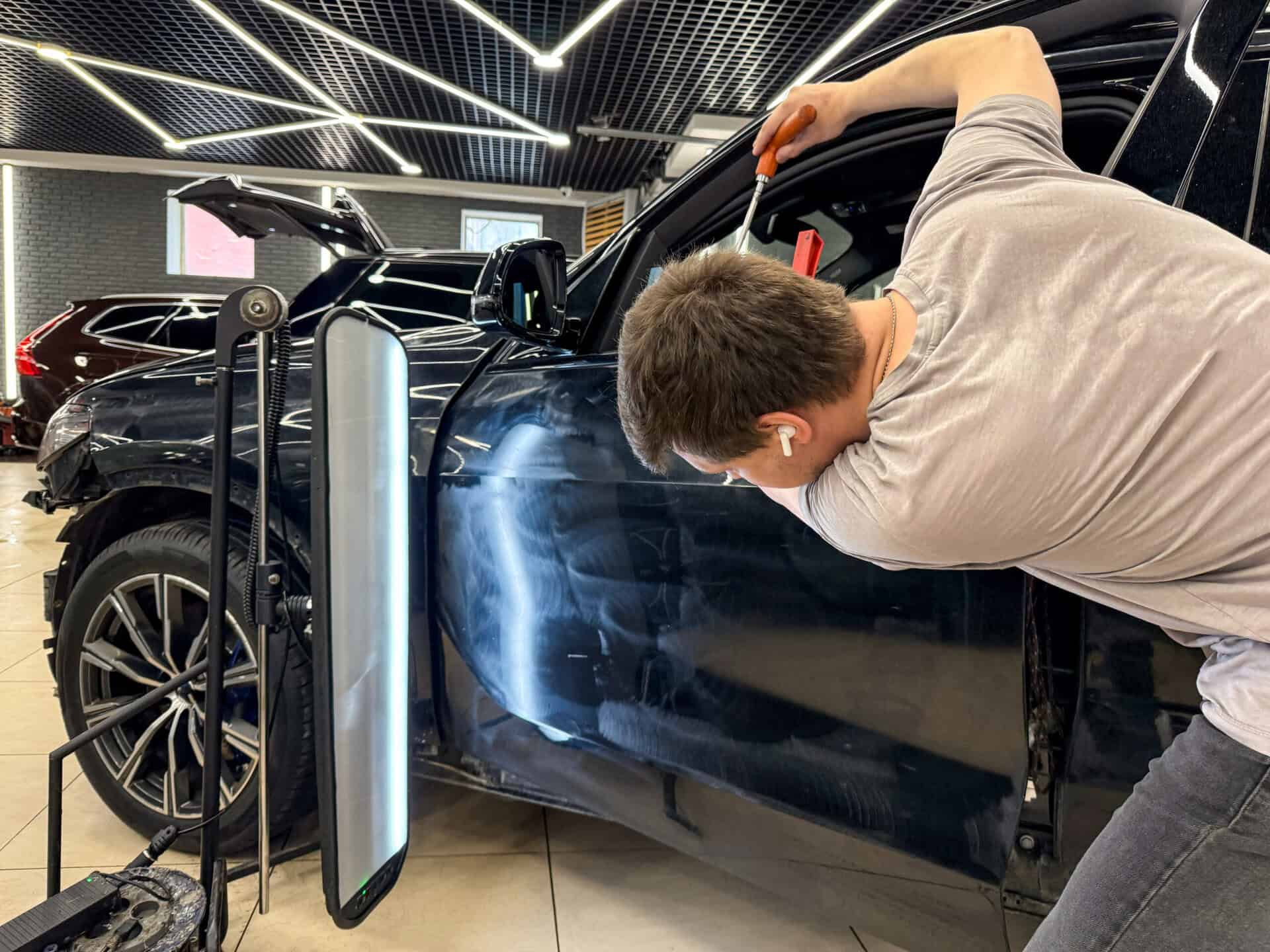
Fixing Scratched Doors, Bumpers and Body Panels
Scratches can affect different vehicle materials. A painted plastic bumper requires a different repair approach from a metal door, aluminium panel or composite component. The shape of the panel and position of the damage also influence how far the repair must extend.
Hardings ARC repairs scratched bumpers, doors, wings, bonnets, quarter panels and other painted bodywork. We also check nearby trims, sensors and mounting points where the damage was caused by contact with another vehicle or object.
Our repair centre is based in nearby Dunstable and supports motorists from across Luton, including Stopsley, Wigmore, Round Green, Leagrave, Limbury, Sundon Park, Marsh Farm and Farley Hill. Customers can request a quotation before bringing their vehicle to our workshop.

Frequently Asked Questions
The following answers cover some of the most common concerns drivers have after finding a scratch on their car.
The cost depends on the scratch’s length, depth and position, the type of paint and whether the panel is also dented or damaged. A light mark that can be polished will generally require less work than a scratch that has penetrated the colour and primer. Metallic, pearlescent and multi-panel repairs can also require additional preparation and colour blending. Hardings ARC can provide a more accurate quotation after inspecting the damage or reviewing clear photographs taken from several angles. We will explain the proposed repair before work begins so you understand whether the area needs polishing, localised paint restoration or more extensive refinishing.
Many deep scratches can be professionally repaired, even when the damage has reached the primer or metal underneath. The affected area must be prepared carefully before the missing paint layers are rebuilt and matched to the existing finish. The repair may extend beyond the exact line of the scratch so that the colour and clear coat can be blended naturally. If the same incident also caused a dent, crack or distorted panel, additional car body repairs may be required. We assess the complete affected area before recommending the most appropriate repair.
A deeper scratch may catch your fingernail or reveal white, grey, black or metallic material beneath the vehicle’s coloured paint. Bare metal, plastic or primer usually indicates that the damage has passed through the clear coat and colour layer. The scratch may also remain clearly visible when the panel is wet. These signs provide a useful indication, but the damage should still be assessed properly before a repair method is selected. Polishing a deep scratch will not replace missing paint and could affect more of the surrounding clear coat without resolving the underlying problem.
Whether to make an insurance claim depends on how the scratch occurred, the extent of the damage, your excess and the conditions of your policy. If another vehicle caused the damage, keep photographs, registration details, witness information and any available footage. Your insurer may require notification even if you ultimately decide to pay for the repair yourself, so check the terms of your policy. Hardings ARC can assess the damage and provide a repair quotation, helping you compare the likely repair cost with your excess before deciding how you want to proceed.
The timeframe depends on whether the damage can be polished or requires preparation, paint and finishing work. A small surface correction may be completed more quickly than a deep scratch running across a large panel. Repairs involving several panels, dents, specialist colours or replacement components will require more time. Paint must also be applied and cured correctly before the vehicle is returned. Once we have inspected the scratch, we can explain the proposed repair process and provide a more accurate indication of how long your car is likely to remain at the workshop.
Yes. Our repair centre serves motorists throughout Luton, Dunstable and surrounding parts of Bedfordshire. Customers based closer to our workshop can view our page about what to do when you have scratched your car in Dunstable. We also welcome enquiries from Houghton Regis, Caddington, Kensworth, Totternhoe, Harpenden and Leighton Buzzard. You can send photographs of the damage when requesting a quotation, although an in-person inspection may still be needed before the repair method and final price can be confirmed.